
Last updated November 25, 2026
 Sweep & inspection
 Caps & crowns
 Flue relining
 Masonry repair
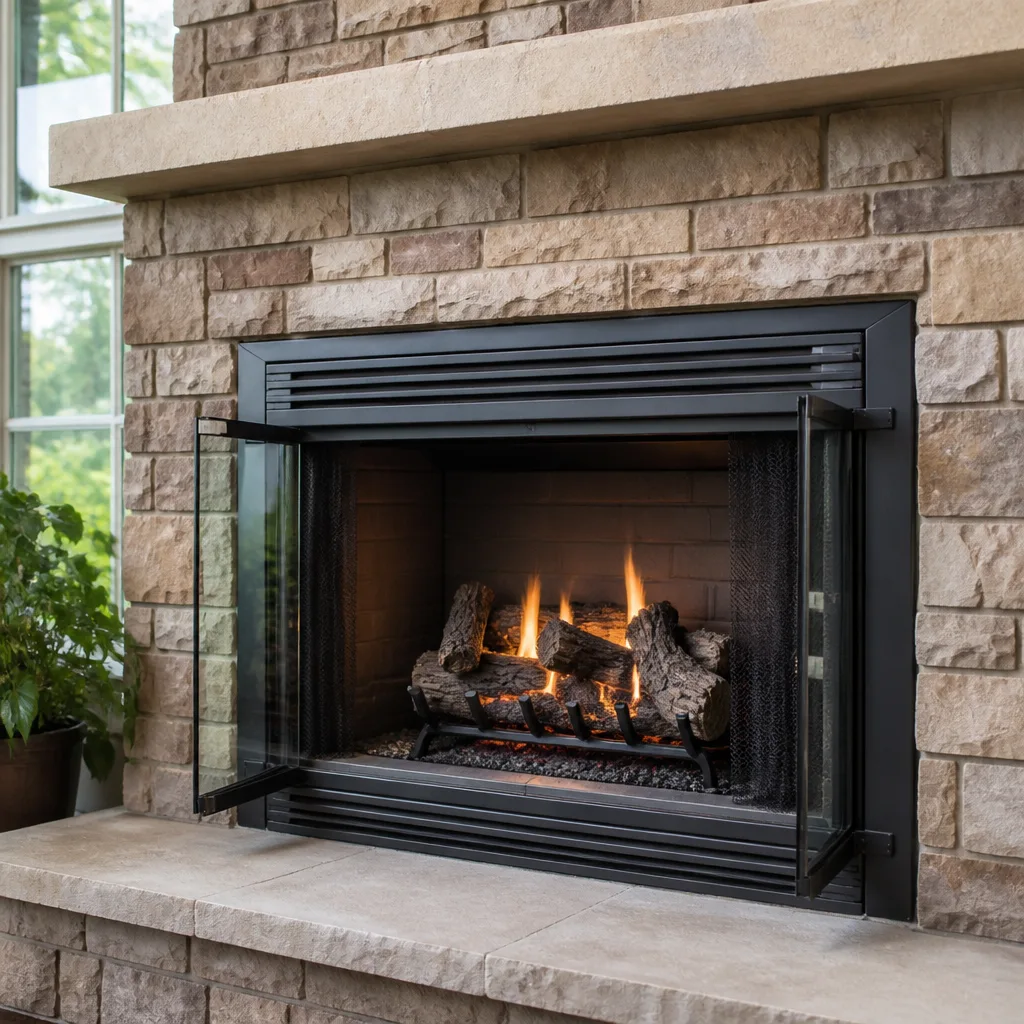 Gas fireplace service
Level 1 sweep and inspection to the NFPA 211 annual standard - flue, crown, cap, and flashing checked and photographed
Chimney sweep logs do not sweep chimneys. They loosen some creosote - which then falls where a brush and vacuum still have to collect it.
Chimney Cleaning Emergency Preparedness Guide for Hamilton Lakes Homes
Most homeowners picture a chimney fire as a roaring, movie-style blaze with flames shooting from the roof. In our experience, that’s the rare version. The dangerous one is quieter: a low, smoldering burn inside a flue that has been coated with creosote for a season or two, crackling faintly while the family sleeps two rooms away. The homeowner often never knows it happened until a camera goes down the flue and finds a cracked tile or a warped liner weeks later. That gap between what a chimney emergency looks like and what people expect is exactly where this guide lives. We’ll walk through the two kinds of chimney crisis, the response protocol for each, and what to prepare before the heating season ever begins in Hamilton Lakes.
Quick Answer
Chimney emergencies split into acute events (active chimney fire, carbon monoxide intrusion, a live animal trapped in the flue) and slow-developing crises (a failing liner discovered mid-heating-season). An active chimney fire means call 911 first, keep the fireplace shut until a technician confirms liner integrity with a camera, and don’t assume the fire department clearing the structure means the chimney is safe. A slow-developing liner failure means stop using the fireplace and book a Level 2 inspection before lighting another fire. Both paths end the same way: an inspection, not a guess.
Styles & brands we work with
- Sweep & inspection
- Caps & crowns
- Flue relining
- Masonry repair
- Gas fireplace service
Table of Contents
- What to Do in an Acute Chimney Emergency
- Recognizing a Slow-Developing Chimney Crisis
- Carbon Monoxide and Your Chimney: The Backdraft Problem
- The Post-Event Inspection Requirement
- The Live Animal Emergency
- Pre-Season Emergency Preparedness
- How to Identify a Reliable Chimney Emergency Provider
- Year-Round Chimney Emergency Timeline
What to Do in an Acute Chimney Emergency
A chimney fire is a fire inside the flue, not the firebox. Creosote, the tar-like byproduct of incomplete combustion, ignites when it builds up beyond a quarter-inch or so on the flue walls. The technical definition matters here because the response is different from a fireplace fire. You don’t fight a flue fire with a bucket of water; you cut the fuel and get everyone outside.
Here’s the sequence we recommend:
- Call 911 immediately. Tell them it’s a chimney fire, not a house fire. Give the full address and confirm whether anyone is still inside. Fire crews will handle suppression, but they are not chimney technicians and will not assess liner damage.
- Get everyone outside. Close the fireplace doors or damper if you can do so safely on your way past, but don’t stop to gather possessions and don’t stay in the room.
- Don’t reopen the fireplace. Not after the fire department leaves, not the next morning, not after a night of cooling. The flue may have cracked tiles, warped a metal liner, or shifted a joint; none of that is visible until someone runs a camera down.
- Book a Level 2 inspection. Call a chimney technician the same day or the next, whichever is realistic. This isn’t a step to fold into a routine annual appointment weeks later.
- Keep the fire out until the inspection clears it. A technician should tell you in writing whether the chimney is safe to use, and if not, exactly what failed and what the fix looks like.
One more point that gets skipped: even a chimney fire the fire department considers “out” can leave a hairline crack in a flue tile that opens up as the masonry cools. Don’t light a fire in a Hamilton Lakes chimney the same night because the firefighter said the house was safe to re-enter. Those are two different questions, and only one of them is the chimney technician’s to answer.
Recognizing a Slow-Developing Chimney Crisis
The second category of chimney emergency doesn’t announce itself. It develops across days or weeks, usually at the height of the heating season when the chimney is in near-constant use. Homeowners in Hamilton Lakes who burn wood through the coldest weeks of the year are the most likely to meet this one, simply because more burn hours mean more stress on the flue lining.
Watch for these signals:
- Smoke rolling back into the room when the damper is open and the flue should be pulling. Backdrafting has many causes, but a collapsed or partially-blocked liner is one of the serious ones.
- A sudden drop in draft after the chimney has performed well all season. Something changed. It’s not the weather.
- Visible moisture or staining on the firebox walls or the face of the masonry near the flue. Water often means a failed crown or a cracked flue, and both progress into interior damage.
- Crumbs of tile or mortar showing up on the smoke shelf or the damper area. That’s the liner shedding material, and it’s a stop-use signal.
- A distinct change in smell when the fire is burning: a metallic or acrid edge to the woodsmoke you can’t attribute to the wood itself.
Any of these justifies booking an inspection before the next fire. A developing liner failure caught at this stage is a repair; caught three weeks later after a fireplace has been pushed hard through a cold snap, it can mean relining the whole flue. chimney sweep and inspection is the right call at the first signal, not the fifth.
What we’ve seen in practice: the slow-developing crisis is where homeowners cost themselves the most money, not because they ignored a warning sign but because they misread it as “the house is just slow to warm up this winter.” It’s worth teaching every adult in the house the five signals above.
Carbon Monoxide and Your Chimney: The Backdraft Problem
Carbon monoxide is the invisible hitchhiker on the chimney story. It’s colorless, odorless, and it moves exactly the wrong way when a chimney stops pulling. Any chimney can become a CO pathway under the wrong conditions, and a cracked flue liner is the most common physical breach that turns a chimney from exhaust system into indoor air pollution source.
Backdraft conditions are what allow that CO to enter the living space rather than exhaust outside. The main causes we see:
- A cold flue. A chimney that hasn’t been used in a while can’t establish the upward draft a fire needs, and pressure wins. Smoke (and CO) rolls into the room.
- A blocked flue. Nest debris, a collapsed liner, or heavy creosote all reduce the passage area until the draft can’t overcome the house’s internal pressure.
- Negative pressure in the home. Kitchen exhaust hoods, bathroom fans, and tight modern houses all pull air out; the chimney can pull interior air back down the flue to compensate.
- A cracked or separated liner. Combustion gases escape the flue before reaching the top, entering the wall cavity or the room around the chimney rather than exiting through the cap.
Symptoms of CO in the home are easy to mistake for something else: headaches, drowsiness, dizziness, nausea, and a feeling of “I don’t feel right in this room.” Multiple people affected in the same room at the same time is the pattern you don’t want to see. If anyone in the household shows those symptoms with a fire burning, get outside and call 911.
A CO detector with a digital readout is the single most useful piece of chimney-adjacent equipment we can recommend. Not just a sound alarm, but a small display you can glance at and see a low-level reading climbing from 5 parts per million to 20 to 50 across a couple of days. That pattern tells you something’s migrating before the alarm ever sounds.
Why a Working CO Detector Doesn’t Make You Safe
This is the point most homeowners miss. A CO detector located in a hallway will eventually pick up elevated CO after it has already entered the living space, and depending on the room layout, the concentration may stay below its alarm threshold for a long time. A cracked liner doesn’t send CO into the whole house at once. It tracks along the chimney cavity and typically enters one room. That detector down the hall is not measuring that room. It’s a backstop, not a substitute for a clean, intact flue.
Our Chimney Sweep Hamilton Lakes team treats every detection of a CO accumulation (or a backdraft complaint) as an inspection trigger, which means the flue gets looked at with a camera, not just a flashlight, before we recommend that anyone light another fire.
The Post-Event Inspection Requirement
After any suspected chimney fire, a Level 2 inspection is not optional, and not just because it’s the standard recommendation. It’s because visible damage from a slow-burning flue fire is often not visible from the top or bottom of the chimney. Creosote fires can run down the full length of a flue at moderate temperature for hours without producing the pyrotechnics that would alert a homeowner. The damage happens inside the tile joints and at the liner seams where nobody outside the camera’s view can see it.
What a Level 2 inspection involves:
- Video camera scan of the full flue from the firebox to the cap, documenting tile integrity, mortar joint condition, creosote thickness, and any obstructions.
- Exterior and accessible interior review of the chimney structure, crown, cap, and flashing condition.
- Draft and venting evaluation across the appliance connections, especially if more than one appliance (fireplace, furnace, water heater) shares the chimney structure.
- A written report with photos that you keep, regardless of who does the repair or when.
That report is the single most valuable document you’ll own as a chimney owner after an event. It establishes what the chimney looked like immediately after the fire, which matters both for insurance and for any future contractor conversation. Without it, you’re relying on memory and verbal impressions.
One more thing about that report: if a technician walks your Hamilton Lakes home after a suspected chimney fire and tells you the liner needs replacing without ever showing you camera footage of why, ask for the footage. You’re entitled to see exactly what they see before you agree to the work. We explain what we find before we quote what it costs, and if we can’t show it on camera, we don’t recommend it.
The Live Animal Emergency
A bird, squirrel, or raccoon that drops down the flue is an emergency, and the natural instinct is exactly wrong. Opening the damper to “let them out” typically sends the animal into the firebox or, more often, into the living room, where it panics, damages furnishings, and may fight anyone trying to help. Worse, in a chimney with a deteriorating liner, an animal clawing at the flue wall can pull tiles loose or shred the liner itself.
Here’s the correct extraction sequence:
- Close the damper and the fireplace doors. Keep the animal contained in the flue. This is the single most important step.
- Close the room door to trap the animal in one space if it does get out of the flue. Open exterior windows in that room, then leave it alone for a bit; most wild animals will exit through an open window when nobody is between them and the exit.
- Don’t start a fire to “smoke them out.” This is dangerous in ways that aren’t obvious: creosote ignition risk, an animal cornered above the damper, and no safe route out if the fire is burning below them.
- Call a chimney technician if the animal hasn’t left on its own. A technician will bring the right tools to reach into the flue, secure the animal, and remove it safely without damaging the liner.
- Install or repair the chimney cap afterward. If an animal got in, the cap is missing or damaged, or the sizing is wrong. The extraction solves the current problem; chimney cap & crown work is what keeps the next one out.
Cap sizing is a detail that most homeowners don’t think about until a bird shows up in the firebox. The sizing depends on the flue opening plus the animal species most common to the area; a raccoon needs a different clearance than a chimney swift. We work with Famco and Copperfield for caps and accessories, because matching the cap to the flue rather than grabbing the closest fit on the shelf is the difference between a one-time visit and a repeat one every spring.
Pre-Season Emergency Preparedness
The window between the end of one heating season and the start of the next is the cheapest, calmest time to prevent an emergency. By the time Hamilton Lakes swings into its first cold snap, sensible homeowners are trying to get a sweep booked and finding the schedule tight. This is where prep work pays off.
What to Have on Hand Before the Season
- A CO detector with a digital readout in each sleeping area, plus one near the chimney-bearing room. Replace the batteries when you reset the clocks; low-level readings are worth noticing, not dismissing as “just a chirp.”
- Chimney fire suppressant sticks or logs as a backup suppression tool kept near the fireplace. Used at the first sign of a chimney fire, they buy the time to call 911 and get outside. They are not a substitute for calling 911 or for a post-fire inspection, just a first-aid tool.
- A fire extinguisher rated for wood fires in the room where the fireplace is, checked for pressure at the start of the season.
- The chimney inspection report and any sweep records in a known folder or digital file. Post-event inspections compare against a baseline; having last year’s photos helps enormously.
- A named technician’s phone number written somewhere more reliable than a saved browser tab. Or posted on the fridge as a physical reminder.
What to Do Before the Season Starts
- Book a sweep and inspection while the calendar still has room. Mid-season bookings are the hardest to place.
- Confirm the cap is intact and correctly sized from the ground with binoculars, or from the roof if you already have a roofer or gutter crew scheduled.
- Have the crown checked. A hairline crack in the crown lets water into the flue, softens mortar, and starts the slow-developing failure path.
- Test the smoke and CO detectors specifically, not just confirm they have batteries. Press the test button and listen.
Our fireplace repair service sits on the other side of this prep work. If the fireplace damper won’t operate smoothly, or the firebox has visible cracks, or the gas log set isn’t lighting reliably, those are the defects most likely to turn into an emergency on the coldest night of the year. Better to find them in October than January.
How to Identify a Reliable Chimney Emergency Provider
Not every sweep service is set up to handle post-event inspections, liner work, or cap and crown repair. Most are cleaning-only operations. Before a crisis, it’s worth identifying the provider you’ll call so you aren’t scrolling through search results at midnight with smoke in the room.
What to look for:
- Inspection-to-repair capability under one company. If the sweep who inspects can’t also reline, cap, or repair, every finding becomes a referral and a scheduling delay. One call covers the full chimney when it’s a single company.
- Camera equipment on the inspection visit. If the response to “can you show me the crack?” is a flashlight and a verbal description, that’s not a Level 2 inspection. A camera and a written report with photos is the standard.
- Brands a homeowner can verify independently. DuraFlex in liner systems, HeatShield in resurfacing, Famco and Copperfield in venting and caps. We name the brands we install because materials matter as much as labor, and a manufacturer verification is a real trust signal.
- HeatShield qualification for lining restoration. When the flue is deteriorated but not fully failed, resurfacing with HeatShield can be a genuinely appropriate middle path. A sweep-only shop doesn’t offer it because it doesn’t reline.
- A written estimate before work begins. Pricing should be per job, set by the estimate, and clear about what’s included. Any service worth calling about should be quotable in writing.
- Confirmed availability in Mecklenburg County. Ask directly: “If I have a chimney fire tonight, what’s the response sequence?” The answer tells you everything about whether they’re set up for emergency prep or just routine cleaning.
The right time to have that conversation is September, not January. Our team answers the phone around the clock and will talk through the prep checklist with any Hamilton Lakes homeowner before the season, no appointment required. Call (855) 766-2824. We answer 24/7. Fast dispatch from 7am to 7pm, Sunday through Friday.
Year-Round Chimney Emergency Timeline
The interesting thing about chimney emergencies is that they have a season. The acute events (fires, CO intrusions, animal intrusions) cluster in the months when people are actively burning or when the chimney sits cold with a cap failure. The slow-developing crises are more evenly spread but tend to surface in the coldest weeks. This timeline is what we’d recommend for a Hamilton Lakes home.
- Early fall (before first fire): Book a sweep and inspection. Verify the cap and crown. Test the CO and smoke detectors. Confirm the suppressant log is accessible, not buried under firewood.
- First cold snap: Warm the flue with a rolled newspaper fire before committing a real load of wood, especially if the fireplace hasn’t been used since spring. A cold flue doesn’t pull properly, and backdrafting on the first fire of the season is one of the most common CO entry events.
- Mid-season: If the draft changes noticeably, or a smell develops, stop using the fireplace and book an inspection. Don’t push through the rest of the season hoping it resolves.
- Late season: If the chimney has been used heavily all winter, a mid-cycle sweep is worth discussing. Creosote volume depends heavily on wood quality and burn habits, not just total burn hours.
- Post-event (any time): Fire, animal intrusion, CO detection, visible staining. Level 2 inspection, camera, written report.
- Spring: The best time for cap repair, crown work, or HeatShield resurfacing, because the schedule is empty and the weather is cooperative. A repair done in spring is a repair that’s done before the next season, not a scramble.
The main principle: the timeline is driven by fire behavior, not by the calendar the way most home maintenance is. Chimney systems give you signals; they just don’t shout them.
Common Mistakes to Avoid
- Assuming a fire department clearance means the chimney is safe. The fire department confirms the structure is not currently burning. They do not evaluate liner integrity. Those are two different inspections and only one requires a camera.
- Opening the fireplace the day after a suspected fire. If the fire was real enough to worry about, it was real enough to crack a tile. Wait for the inspection report; don’t stage a test fire.
- Opening the damper for a trapped animal. This puts the animal in the living room and stresses the liner. Contained, then extracted, is the correct sequence.
- Relying on a CO detector down the hall as if it were a chimney diagnosis. It’s a backstop, not an assessment. A cracked liner can route CO into one room without ever tripping a hallway alarm.
- Booking a sweep-only company for a post-event call. If the company can’t inspect with a camera and can’t do liner, cap, or crown work, the finding will become a referral and a delay. In Hamilton Lakes, that gap costs time you may not have in the middle of the heating season.
- Skipping the annual sweep to “see if it really needs it.” Creosote volume can’t be judged by looking up the flue with a flashlight. The scheduled sweep is what tells you whether the chimney is fine or has been accumulating for two seasons.
- Ignoring a slow-draft problem for a whole winter. A fire that used to draw well and now struggles is a signal. The right move is an inspection, not a workaround with more kindling.
See the difference
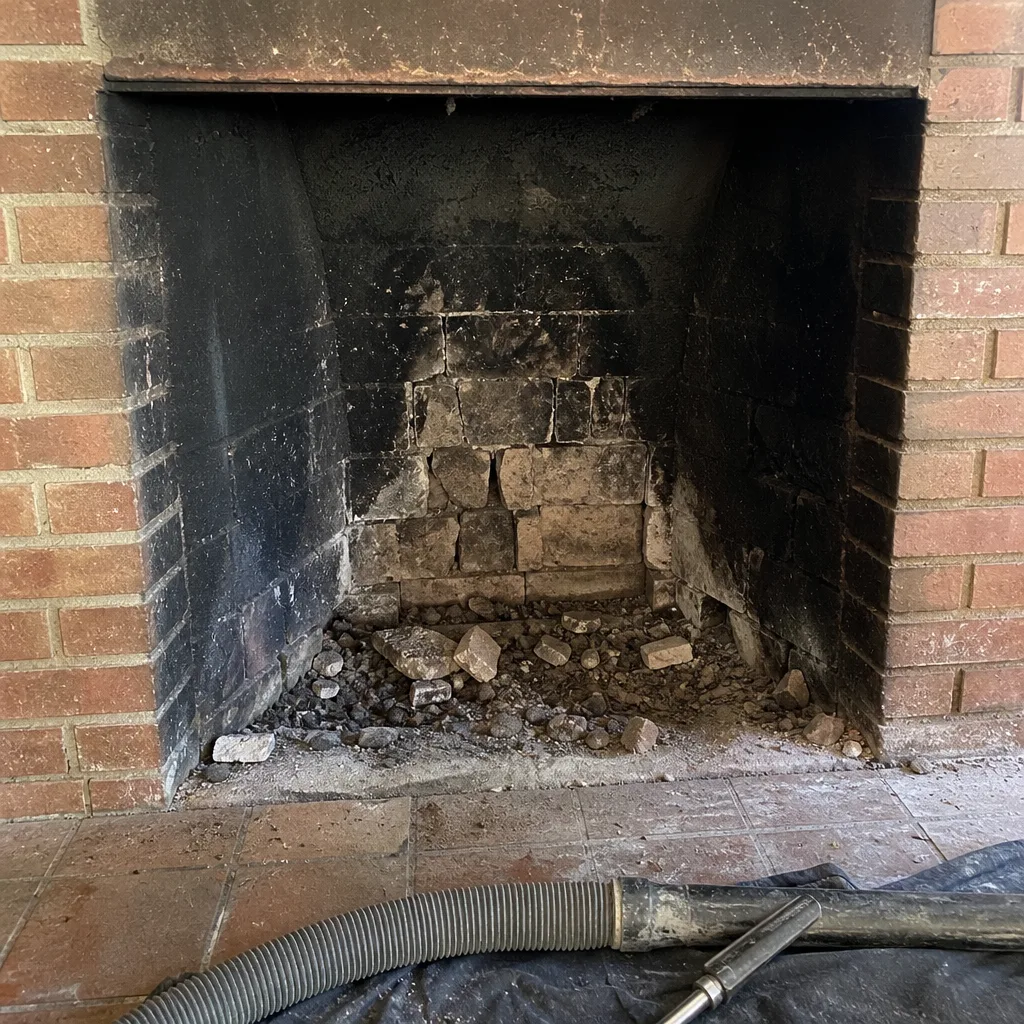 Before
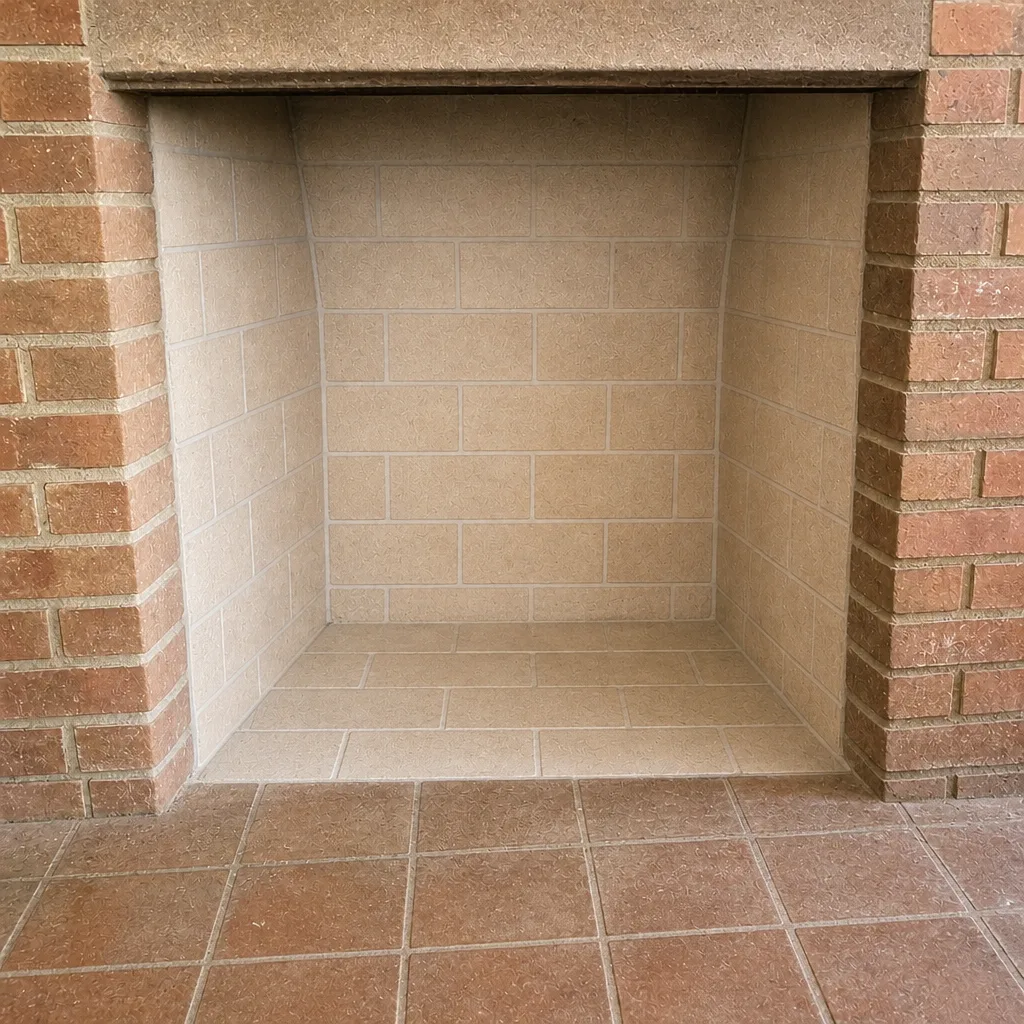 After
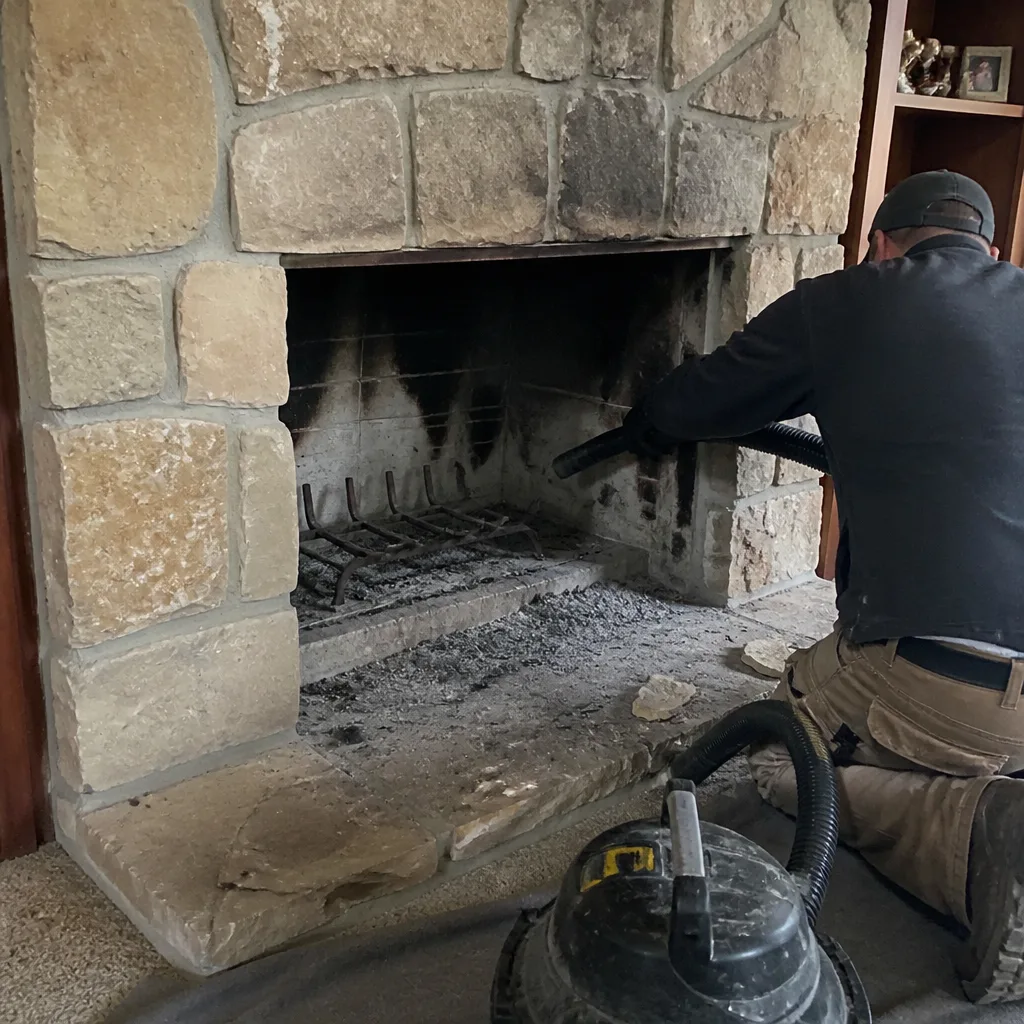 Before
 After
 Before
 After
When to Call a Professional
Call for a professional inspection if you experience any of the following: a suspected chimney fire of any duration, a CO detector alarm or a rising number on a digital readout, backdrafting smoke with a clean burn, a live animal in the flue, visible staining or crumbled material in the firebox, a cap that’s come loose or missing, or a noticeable change in draft that you can’t explain by weather. Call before lighting the fireplace again, not after. In Hamilton Lakes, these are the cases where camera inspection matters more than whatever a flashlight suggests. Our technicians have up to 11 years of experience walking these kinds of decisions through with homeowners. If it’s in our service mix, we’ll schedule it; if it needs a different trade, we’ll say so. Chimney Sweep Hamilton Lakes offers free estimates in Hamilton Lakes. Call (855) 766-2824.
Frequently Asked Questions
Call 911 immediately and get everyone outside. Tell the dispatcher it’s a chimney fire, not a house fire. Close the damper or fireplace doors on your way out if it’s safe, but don’t stop for anything else and don’t stay inside trying to fight it. Do not reopen the fireplace after the fire department leaves; the chimney needs a technician’s camera inspection before it’s safe to use again.
Only after a Level 2 inspection confirms the liner is intact. That means a camera scan and a written report, not a visual check from the top or a verbal “looks fine.” If the inspection finds damage, the fireplace stays out of service until the repair is done. Call (855) 766-2824 for an exact quote on the inspection, estimates are free.
Yes. Combustion gases carrying carbon monoxide can escape through a cracked tile or liner seam before reaching the chimney cap, and instead route into the wall cavity or the room around the chimney. A CO detector with a digital display is a useful backstop, but it doesn’t replace the camera inspection that would actually find the crack. If you suspect a liner breach, stop using the fireplace and book an inspection.
Acute events are active and time-critical: a chimney fire happening now, a CO level rising in the room, an animal trapped in the flue. Slow-developing crises are progressive but not imminent: a liner that’s failing, a crown that’s cracking, a draft that’s drifting downward over the season. Acute events require stopping use immediately and calling 911 if fire or CO is involved. Slow-developing ones require stopping use and booking an inspection within days, not weeks. Call (855) 766-2824 and we can help identify which category you’re in.
After any suspected chimney fire, animal intrusion, or CO detection, a Level 2 inspection is required, no exceptions. For routine annual maintenance, a Level 1 visual inspection is typically sufficient if the chimney has been clean and stable. If the chimney is older, or the liner condition is uncertain, or the fireplace is being used heavily, Level 2 is worth the extra step. Call (855) 766-2824 to talk through which makes sense for your chimney.
A CO detector with a digital readout for each sleeping area and one near the fireplace room, a chimney fire suppressant log kept near the fireplace, a wood-rated fire extinguisher with a pressure check, your last inspection report on file, and a chimney technician’s phone number written somewhere physical. Test the detectors at the start of the season when you would test smoke alarms. Anything else is optional. Call (855) 766-2824 for a free pre-season checklist conversation.
The Bottom Line
Chimney emergencies split into two tracks because they require two different responses. Active fire, CO intrusion, or an animal in the flue is a 911-then-inspect situation: stop use, get out, and don’t touch the fireplace until a technician has run a camera. Slow liner failure is a stop-and-inspect situation: notice the signal, book the Level 2, and don’t push the chimney through the rest of the season. In Hamilton Lakes, the prep work you do before the first cold snap is the cheapest emergency plan there is. Sweep, inspect, cap, test, and have a technician’s number ready. One call covers the full chimney when you have the right company, and it’s better to have that number before you need it.
When you’re ready to schedule a sweep, an inspection, or pre-season cap and crown work, or when something in the flue has changed and you want a straight answer about whether it’s safe to burn, call us. We’ll bring the camera and show you what we see before we tell you what it costs. Call (855) 766-2824 for a free estimate. We answer 24/7. Fast dispatch from 7am to 7pm, Sunday through Friday.
Written by the team at Chimney Sweep Hamilton Lakes.