
Last updated November 25, 2026
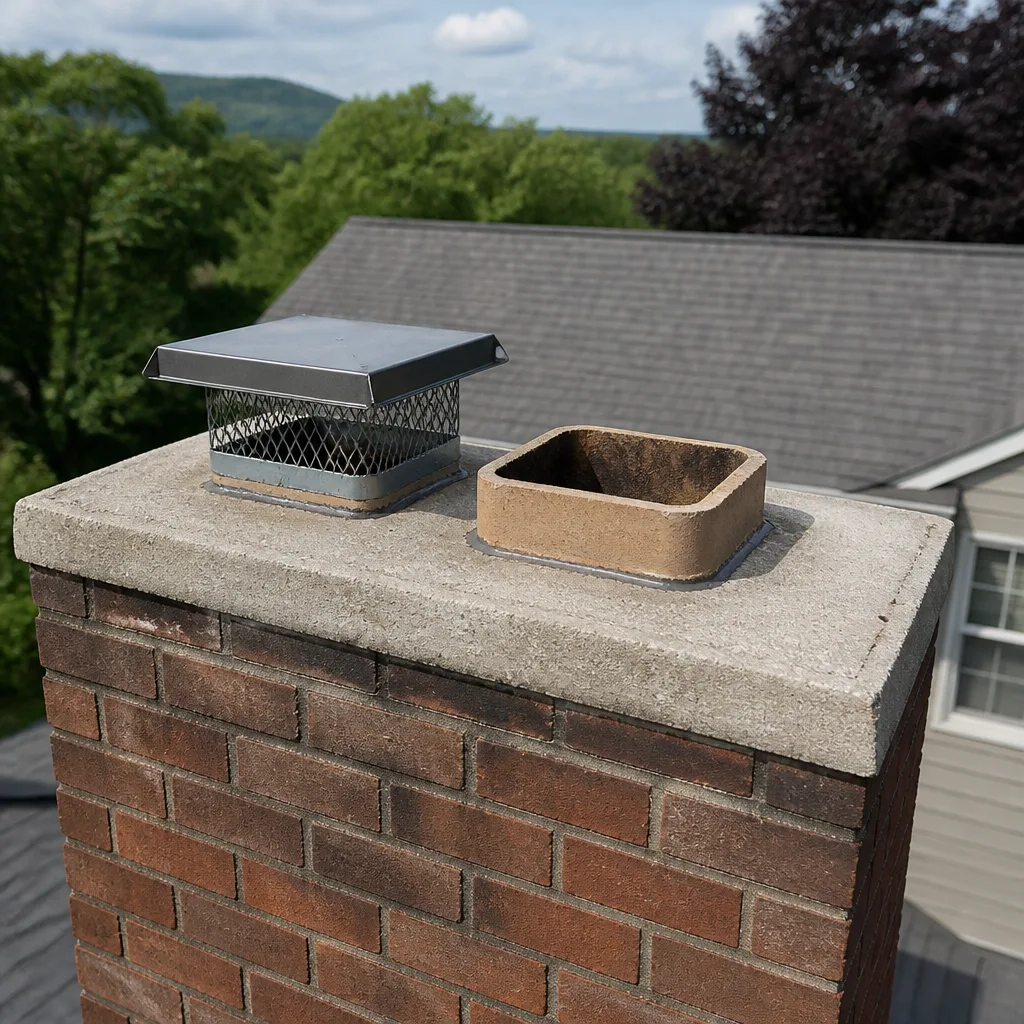 Sweep & inspection
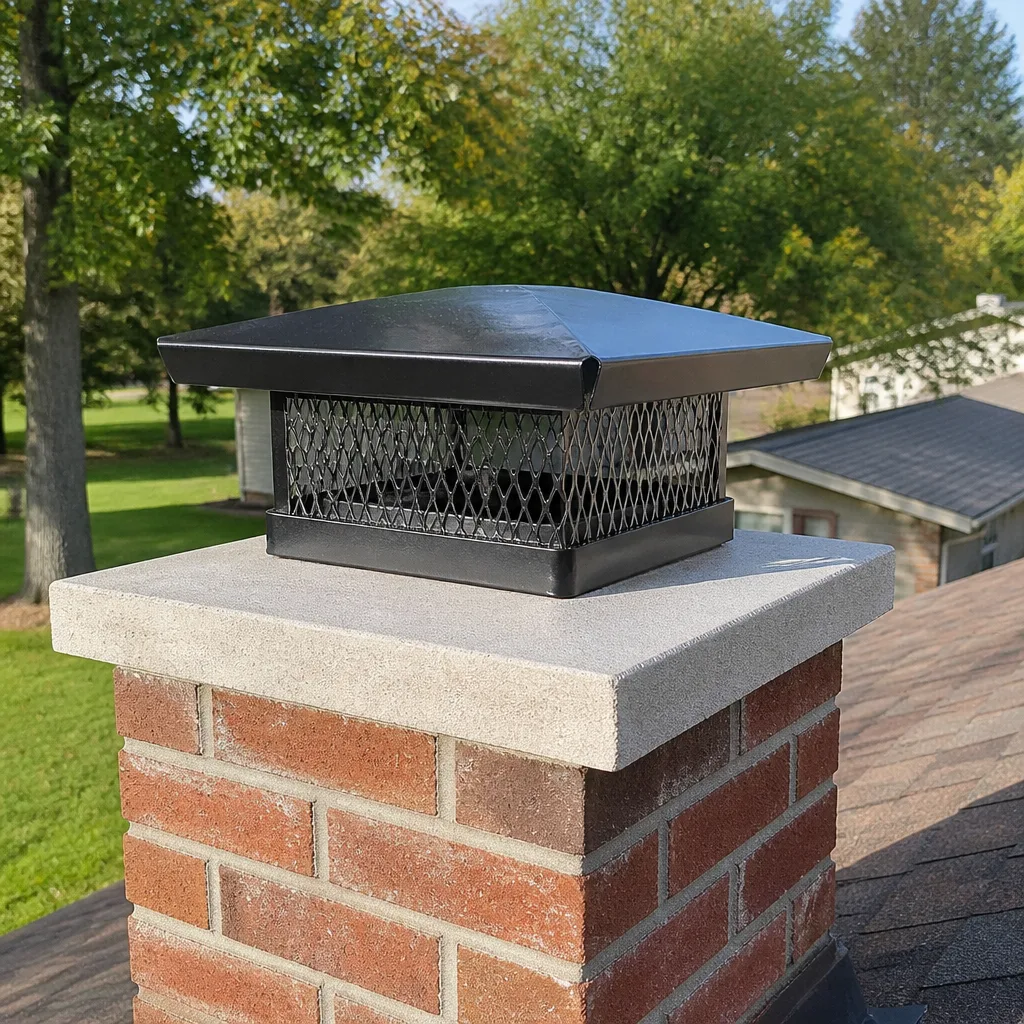 Caps & crowns
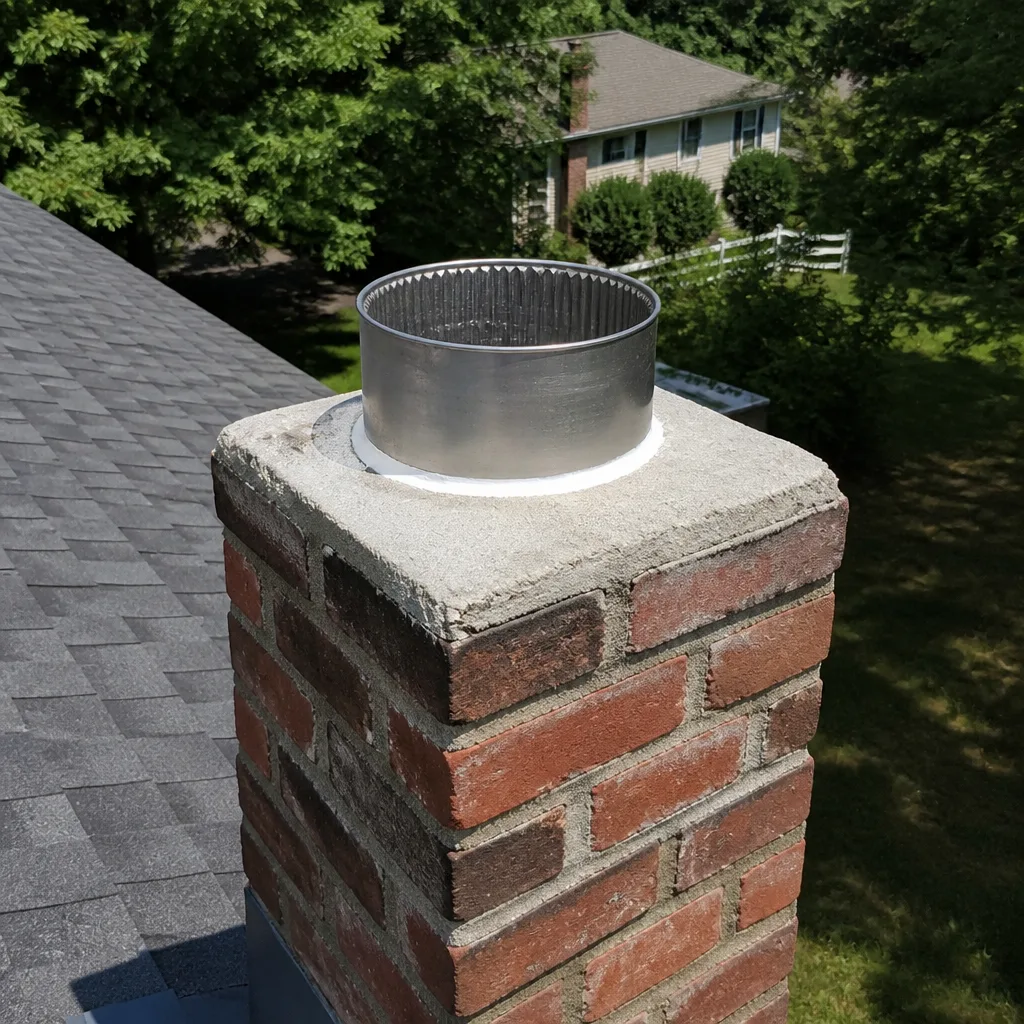 Flue relining
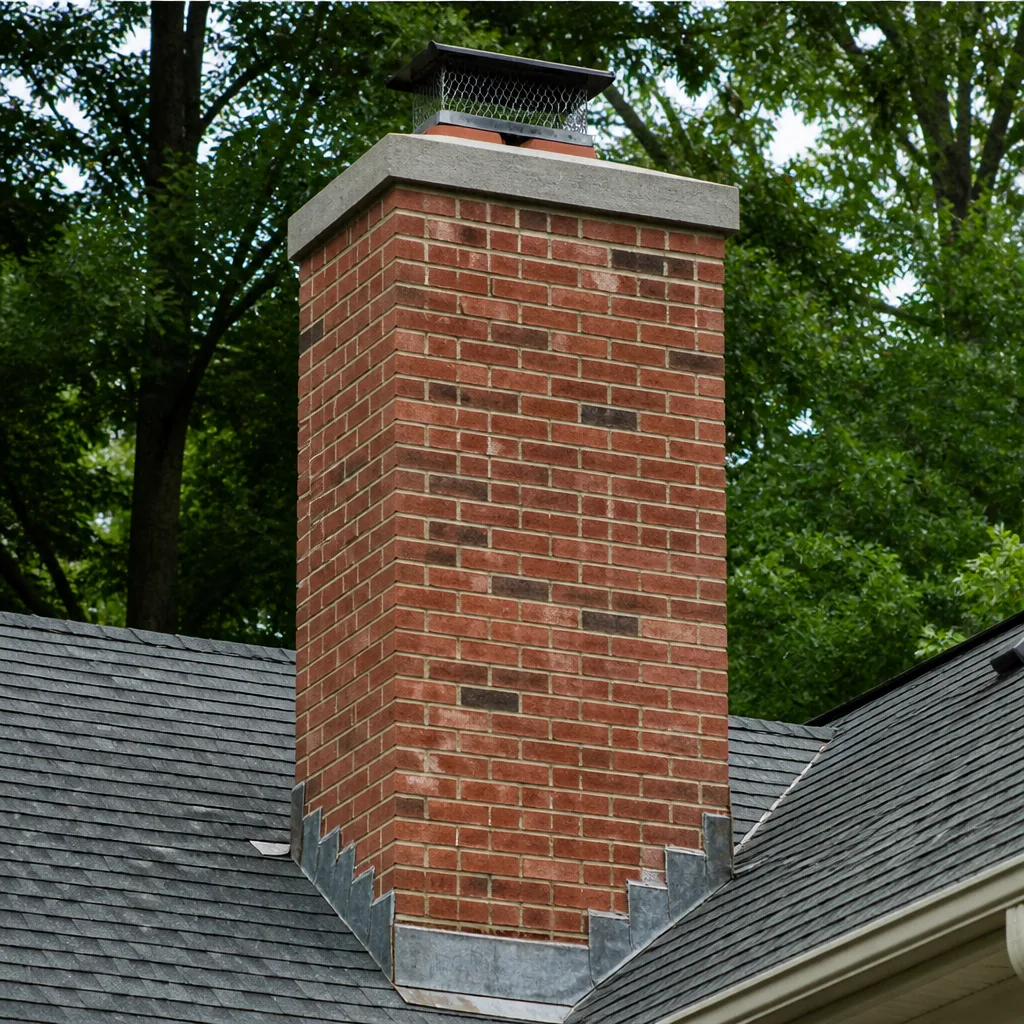 Masonry repair
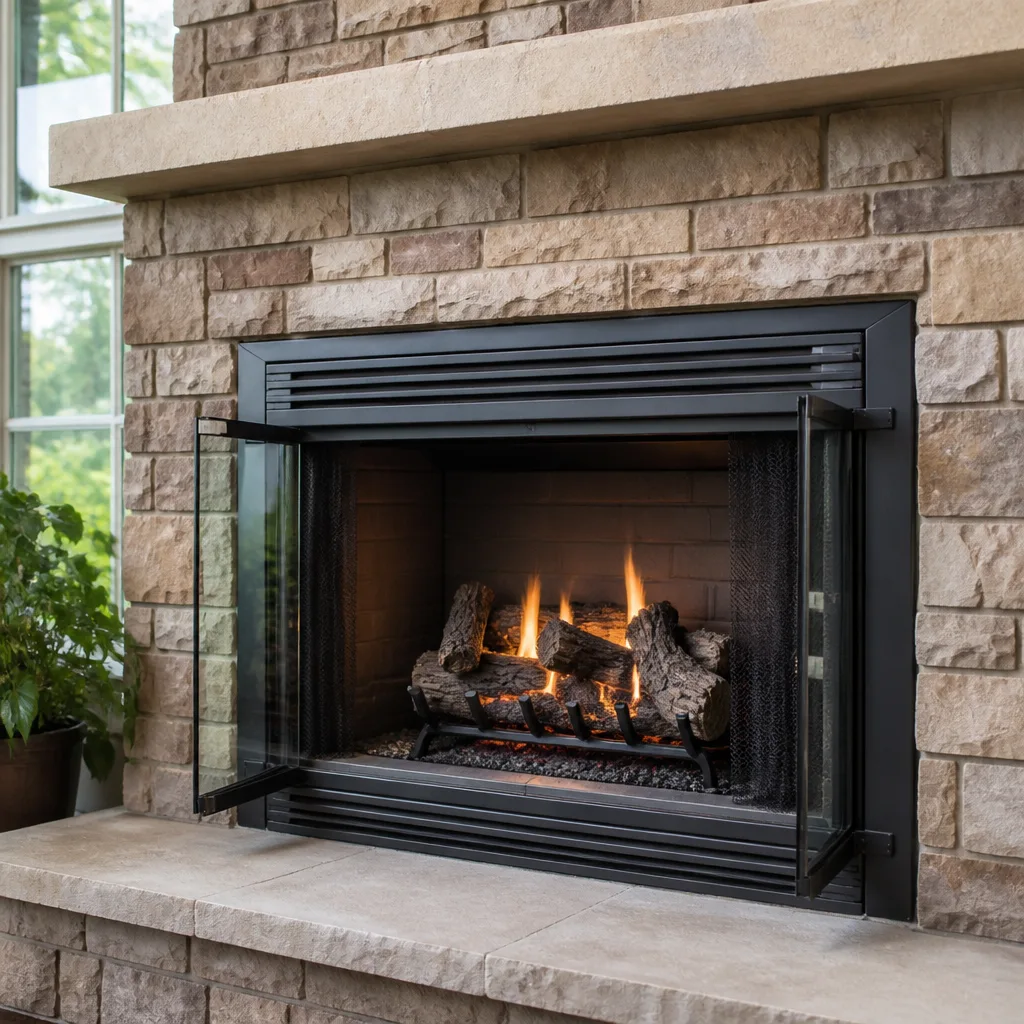 Gas fireplace service
Level 1 sweep and inspection to the NFPA 211 annual standard - flue, crown, cap, and flashing checked and photographed
Chimney sweep logs do not sweep chimneys. They loosen some creosote - which then falls where a brush and vacuum still have to collect it.
The Complete Guide to Chimney Cleaning in Hamilton Lakes
Most homeowners book a chimney sweep, watch the brush go up, pay the bill, and consider the job finished. That’s the wrong mental model. A sweep is not a transaction that ends when the brush comes back down – it’s the first step in a diagnostic sequence, and what turns up during cleaning is what tells you whether your chimney has two more winters of easy service in it or a liner problem building quietly behind the mortar. The Level 1 inspection that should accompany every sweep is where the real information lives. Skip it, and a modest annual service can quietly become a liner replacement a couple of winters later. This guide walks through how chimney cleaning actually works in Hamilton Lakes, what the three creosote stages mean, why the humid Piedmont climate is harder on masonry than most homeowners realize, and what a complete sweep visit should include beyond brushing.
Quick Answer
Chimney cleaning in Hamilton Lakes means more than brushing the flue. A complete service pairs mechanical sweeping with a Level 1 inspection, a camera scan of the flue and smoke chamber, and a written condition report with photos. The cleaning tells you what’s in the chimney; the inspection tells you what condition it’s in and what, if anything, needs attention before the next burning season.
Styles & brands we work with
- Sweep & inspection
- Caps & crowns
- Flue relining
- Masonry repair
- Gas fireplace service
Table of Contents
- What a Complete Chimney Sweep Actually Includes
- The Three Inspection Levels – and Which One You Actually Need
- Creosote Stages 1, 2, and 3 – Why Stage Matters More Than Frequency
- How the Hamilton Lakes Climate Affects Your Masonry
- Sweep-and-Leave vs. a Written Condition Report
- When a Liner Needs Relining – and When HeatShield Is the Better Answer
- Cap and Crown: The Cheapest Repair You’ll Ever Make
- How Often Should You Schedule Cleaning?
What a Complete Chimney Sweep Actually Includes
A proper sweep visit is a four-part process, not a single pass with a brush. In our experience, homeowners who have only ever hired a sweep-and-go operation are often surprised by how much a complete visit covers. Here’s the sequence a thorough technician should follow:
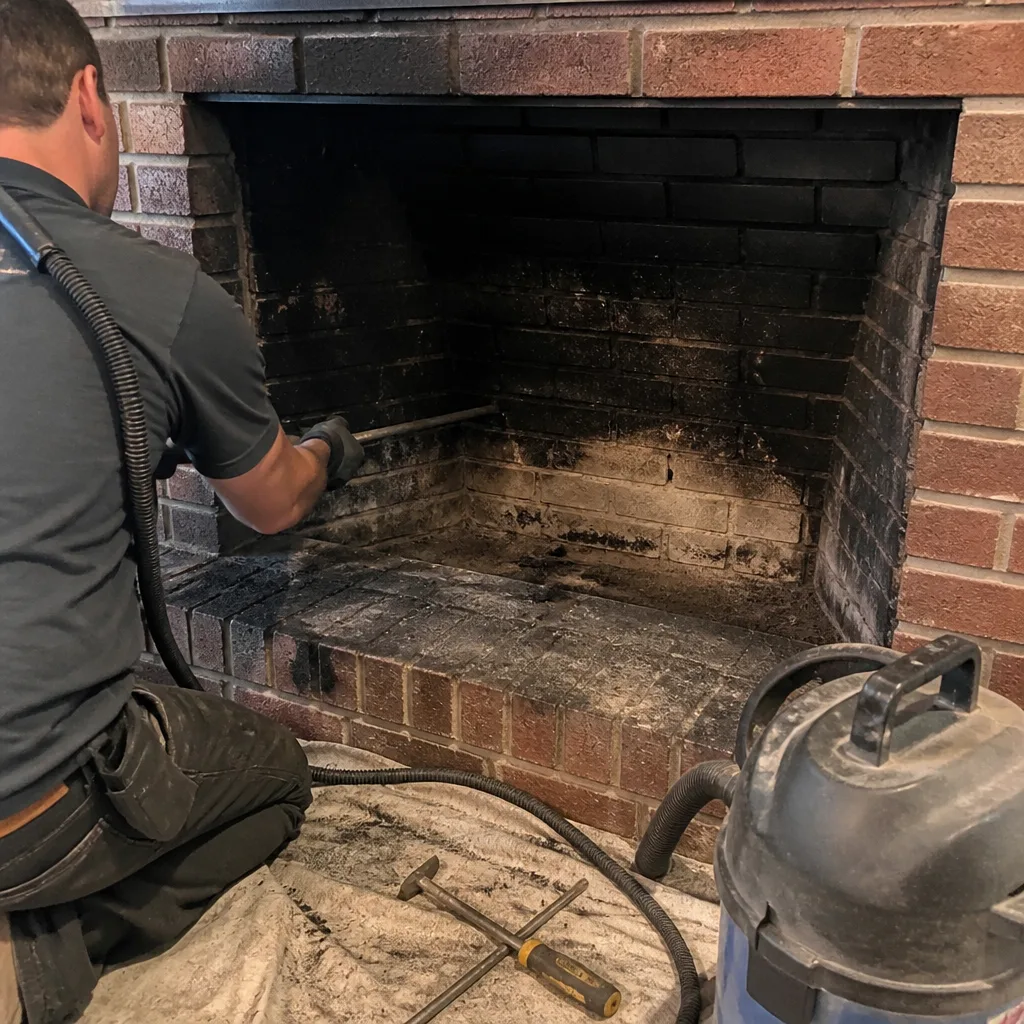
- Setup and containment. Drop cloths on the hearth, a sealed vacuum running the entire time, and a clear look at the firebox before anything goes up the flue. This is the moment to note whether the damper opens and closes freely and whether the firebox brick shows cracking or spalling.
- Mechanical sweeping of the flue. Brushes sized to the flue’s actual interior dimension, worked from the top down or bottom up depending on the chimney’s configuration. Rotary equipment is used where soot and glaze have bonded to the liner walls.
- Smoke chamber and shelf inspection. The smoke chamber is the tapered transition between the firebox and the flue. It’s also where creosote and soot collect out of sight on most chimneys. A camera scan here is not optional if you want a real answer about what’s going on.
- Exterior check – cap, crown, flashing. The cap and crown are the chimney’s first line of defense against water, and water is the number-one cause of expensive masonry failure in this part of North Carolina. We cover that in detail under chimney cap & crown.
A complete sweep in Hamilton Lakes should also produce documentation. If you don’t walk away with photos and a written condition summary, you don’t actually know what was found, and you have no baseline for comparison next year. That reporting gap is the single biggest difference between a service call and a real inspection.
The Three Inspection Levels – and Which One You Actually Need
Chimney inspections follow a three-level framework defined by the Chimney Safety Institute of America (CSIA). Knowing which level fits your situation saves you money and prevents over-selling:
Level 1 Inspection
This is the standard inspection that should accompany every routine sweep. It covers the readily accessible portions of the chimney and venting system – firebox, damper, smoke chamber, flue (via camera), and the visible exterior. A Level 1 is what you need after routine seasonal use, after a small fire, or as an annual baseline.
Level 2 Inspection
A Level 2 adds a full camera scan of the flue’s entire length, the smoke chamber, and accessible attic and crawlspace areas around the chimney. It is required before a property sale, after any chimney fire (even a small one you think went out on its own), after a structural event like a storm or earthquake, or after any change to the chimney’s fuel type or appliance. If you’ve just bought a home in Hamilton Lakes and don’t have a documented inspection history, a Level 2 is the right call.
Level 3 Inspection
A Level 3 is a diagnostic inspection that requires opening walls, ceilings, or the chimney’s exterior structure to access concealed areas. It’s rare – reserved for suspected hidden damage or hazardous conditions that a Level 2 can’t fully resolve.
Which level fits your situation?
- Routine annual sweep: Level 1.
- Recent property sale or purchase: Level 2.
- After a storm, lightning strike, or chimney fire: Level 2.
- Suspected hidden damage or persistent performance problems: Level 3.
We always explain which level applies before we quote it. That’s a small thing that makes a big difference in how a visit feels – you shouldn’t be told after the fact that a Level 2 was “necessary” when a Level 1 would have answered the question.
Creosote Stages 1, 2, and 3 – Why Stage Matters More Than Frequency
Creosote is the residue left behind by incomplete combustion, and it builds up in three distinguishable stages. The stage – not the frequency of cleaning – is what determines how the chimney needs to be handled.
Stage 1: Soot and Flaky Creosote
A thin, dusty, flaky layer of soot and light creosote. This brushes off readily with standard equipment. Most Hamilton Lakes chimneys burning well-seasoned wood with good draft land here between annual sweeps.
Stage 2: Glazed Creosote
A harder, shinier, crusted layer that has begun to fuse to the flue walls. It doesn’t brush off – it takes rotary equipment and chemical treatment to remove safely. Stage 2 build-up typically points to one of three things: burning wet or unseasoned wood, a chimney that’s running cool because of poor draft, or an oversized flue relative to the appliance.
Stage 3: Glaze
A dense, tar-like, highly combustible coating that has essentially baked onto the flue interior. Stage 3 creosote is the condition that feeds serious chimney fires, and it often requires professional chemical treatment before mechanical sweeping can even finish the job. If a technician sweeps your chimney and leaves without addressing Stage 3 glaze, nothing has actually been solved.
Why this matters: a homeowner who sweeps every year but burns wet wood and suffers from poor draft can still be building Stage 2 glaze between visits, while a homeowner who sweeps every two years but burns seasoned wood and maintains strong draft may never get past Stage 1. The frequency matters less than what’s happening inside. That’s one reason we photograph the flue interior after a sweep – so next year’s comparison is fact-based rather than a guess.
How the Hamilton Lakes Climate Affects Your Masonry
Hamilton Lakes sits in the humid Piedmont, and that climate has a specific effect on masonry chimneys that most sweep-only operations don’t talk about. Here’s what we watch for in this area specifically:
- Efflorescence between sweeps. The white, chalky staining that appears on brick is salt pushed to the surface by moisture moving through the masonry. It’s a visible indicator that water is migrating through the brick. Left unaddressed, that same moisture is what drives mortar joint failure and, eventually, spalling brick.
- Mortar joint erosion. Piedmont freeze-thaw cycles are moderate compared to mountain climates, but they still matter. Water that soaks into a mortar joint during a mild wet stretch can expand during a subsequent cold snap and crack the joint loose. The result is a slow erosion that shows up as crumbling mortar lines – the beginning of a rebuild if it isn’t repointed in time.
- Crown cracking. A masonry crown – the concrete or mortar cap at the top of the chimney – cracks over time as it expands and contracts through our wet/dry cycle. Once a crown cracks, water runs straight down into the chimney’s interior. This is why crown work is preventive, not cosmetic.
- Masonry chimney interiors drying slowly. Wood-burning masonry chimneys here take longer to fully dry between burning seasons than their dry-climate counterparts. That means a chimney that ran all winter is often still holding moisture into spring and summer – which is also why we schedule sweeps in the shoulder seasons when slow drying isn’t a concern.
None of this is meant to suggest your chimney is falling apart. It’s the ordinary wear that comes with a humid climate, and it’s exactly the kind of thing that shows up during a proper sweep visit and gets missed by a sweep-only call.
Sweep-and-Leave vs. a Written Condition Report
There are two kinds of sweepers in the trade, and the difference between them is enormous from a homeowner’s perspective:
The sweep who cleans and leaves tells you the chimney is “good” or “needs work” on the way out the door. There’s no documentation, no photos, no baseline. Next year, no one remembers what was found, and every decision restarts from zero. If a repair is recommended, you have no way to independently verify it.
The sweep who produces a written condition report leaves you with a document: photos of the flue, notes on creosote stage, condition of the smoke chamber and damper, cap and crown status, and clear recommendations labeled urgent versus routine. It’s the difference between being told about a problem and being shown one.
We don’t want to over-dramatize this, but it’s the reason some homeowners end up in a “sweep guy / repair guy” cycle where every recommendation feels like it’s coming from somebody who profits from it. Continuity solves that. When the same company that sweeps also handles the repair, the recommendation is verifiable from the same records. That’s why we handle sweeping, inspection, fireplace repair, chimney repair, and cap/crown work under one roof – the paperwork doesn’t get lost between vendors.
When a Liner Needs Relining – and When HeatShield Is the Better Answer
The word “relining” makes homeowners nervous, and it should – a full liner replacement is one of the larger expenses a chimney can require. But it’s not the only answer, and it’s often not the right answer.
What relining means. A chimney liner is the flue interior surface that separates combustion gases from the surrounding masonry or framing. When it’s cracked, spalling, or otherwise compromised, the chimney cannot safely vent – which is why a compromised liner matters.
What the sweep finds matters. Cracks, spalling, and gaps in the liner show up during the camera scan that should accompany a proper sweep. If the liner is failing in isolated sections while the surrounding structure is sound, a full tear-out and replacement may not be needed. That’s where HeatShield comes in.
HeatShield restoration. HeatShield is a resurfacing system for deteriorated clay flue liners. A specialized compound is applied to the interior, filling cracks and restoring the liner’s usable surface. It’s an important option for older masonry systems where a full liner replacement is cost-prohibitive or structurally awkward. We’re HeatShield-qualified, which means we can evaluate whether your chimney is a candidate for restoration rather than defaulting to full replacement.
We don’t consider HeatShield a universal answer. It’s an appropriate solution when the liner’s underlying structure is still sound and the failure is a resurfacing-level problem. When the flue has lost its structural integrity, a full relining with a system like Olympia Chimney is what actually closes the loop. Either way, the recommendation should follow the evidence, not the other way around – which is why we show the camera footage before we quote the fix.
Cap and Crown: The Cheapest Repair You’ll Ever Make
Cap and crown work is the least expensive preventive maintenance on the chimney, and it’s the one people defer longest. A properly fitted stainless cap keeps out rain, snow, and animals while letting exhaust escape freely. A sound crown sheds water off the chimney top instead of letting it run down the flue walls. Between the two, cap and crown work stops the water intrusion that causes the majority of masonry rebuilds we see.
What does that look like in practice?
- Cap sizing is not one-size-fits-all. A cap that’s too large fits loosely and blows off; one that’s too small restricts draft. It should be sized to the flue’s actual interior dimension. We install caps from brands like Gelco and Olympia Chimney depending on the flue type and configuration.
- Crown repair vs. crown replacement depends on the extent of cracking. A hairline crack can sometimes be sealed; a crown that’s cracked through or lifted from the chimney top usually needs to be rebuilt.
- Flashing at the roofline is the third water-defense layer, and it’s often overlooked until a ceiling stain shows up.
Preventive cap and crown work now – not an emergency rebuild later. We name the brands we install because materials matter as much as labor, and a cheap import cap is not the same product as a professionally fitted system. If you’ve never had your cap or crown checked, this is the single most valuable thing to ask about on your next sweep.
How Often Should You Schedule Cleaning?
The general recommendation for wood-burning appliances is an annual inspection, with cleaning as needed. But the annual inspection is the constant; the cleaning frequency varies. Here’s what actually drives it:
- How much you burn. A homeowner burning three cords per winter should plan on an annual sweep; someone burning a handful of decorative fires may need cleaning less often – but still needs the annual inspection.
- What you burn. Seasoned, dry wood produces less creosote than wet or green wood. Burning properly matters as much as sweeping.
- How the chimney draws. A chimney with strong, warm draft keeps flue gases moving and reduces creosote deposition. Poor draft cools the gases and builds residue faster.
- What the previous year’s report said. If the flue showed Stage 2 glaze last year, plan on cleaning twice that year rather than assuming an annual pass will keep up.
For homeowners in Hamilton Lakes with an actively used fireplace, a late-summer or early-fall sweep is the practical default – it’s before burn season starts, and the masonry has had months to dry from the previous winter. If you’re calling for a first-time sweep, book it sooner rather than later in the year, because cleaning a chimney you haven’t used yet is the cheapest time you’ll ever have to establish a baseline.
Common Mistakes to Avoid
- Treating the sweep as the whole job. A brush pass through a flue tells you very little on its own. The inspection is where the information lives.
- Skipping the camera scan because “the sweep looked clean.” A camera looks at the smoke chamber and the upper flue – two areas where creosote and hairline cracks hide from a visual inspection at the firebox.
- Burning wet wood because it was cheaper. Wet wood is the largest single cause of accelerated creosote build-up. The cost savings on wet wood are usually eaten up by the extra cleaning it causes.
- Putting off a cap because “the chimney already has a spark arrestor.” A spark arrestor is not a cap. If it doesn’t keep water out of the flue, your chimney is still vulnerable to the efflorescence and crown cracking we see so often in the Piedmont.
- Ignoring efflorescence on the exterior brick. Those white stains are a moisture migration signal. Left alone, mortar joint erosion follows, and the repair bill goes up by an order of magnitude.
- Hiring a sweep who doesn’t document. If you don’t have a written condition report with photos, next year’s “nothing changed” or “everything’s worse” claim is unverifiable.
- Over-cleaning out of anxiety. More frequent cleaning is not always better; it’s what the flue’s condition tells you. A Stage 1 flue cleaned twice a year when once would do doesn’t get safer from the extra visit.
See the difference
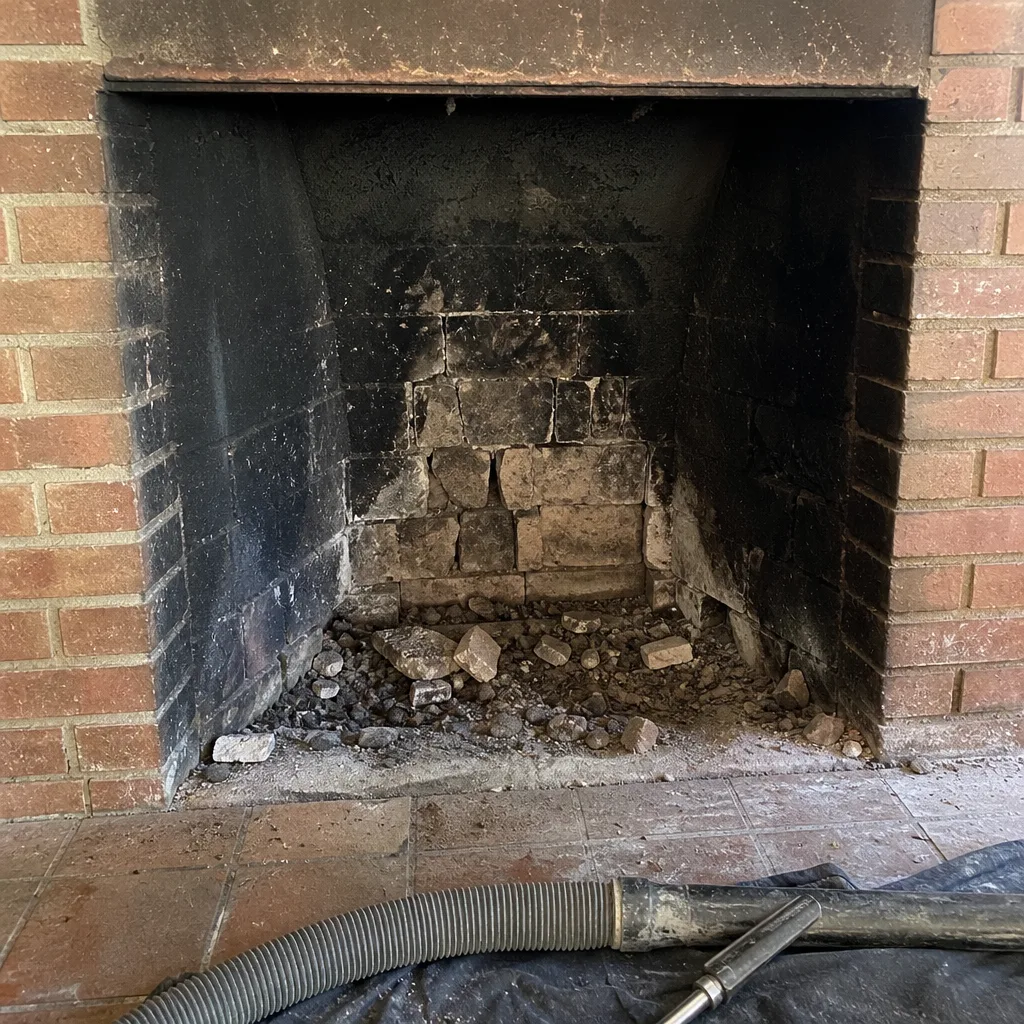 Before
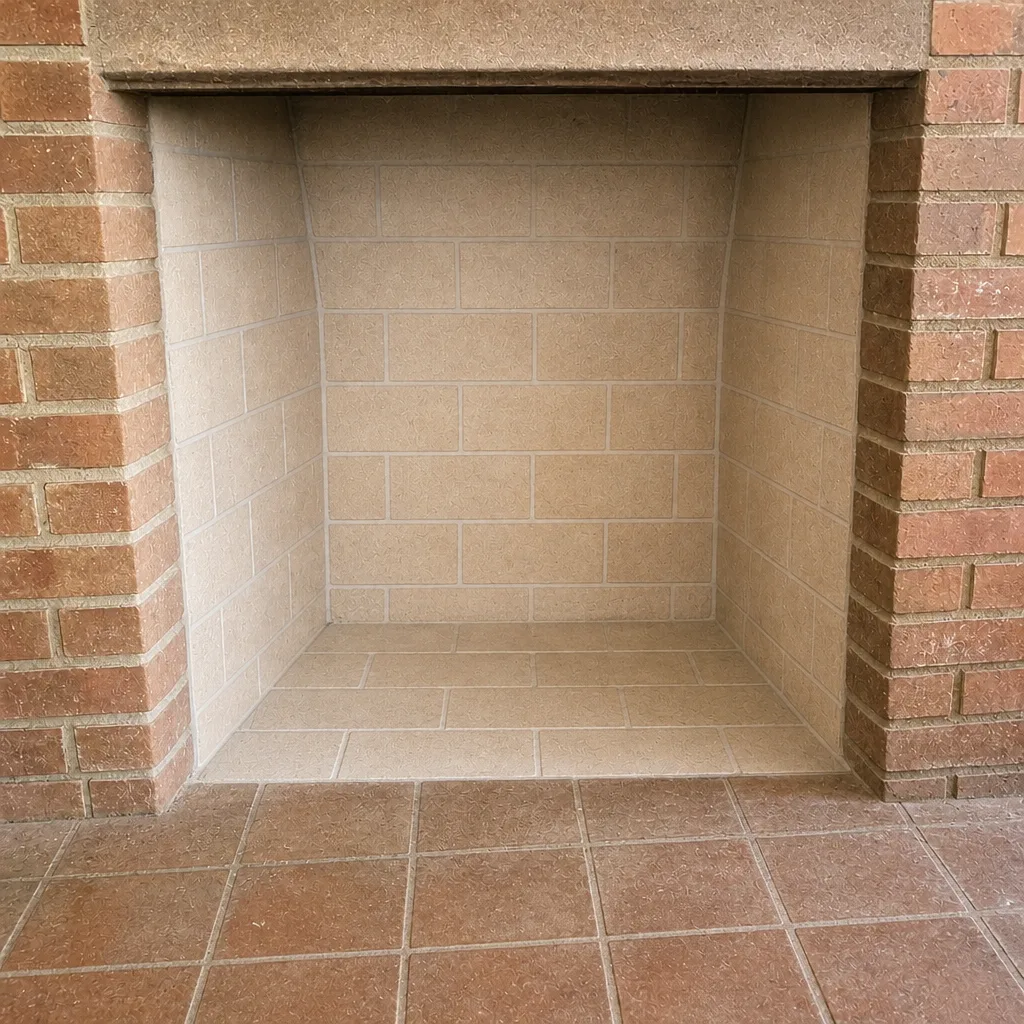 After
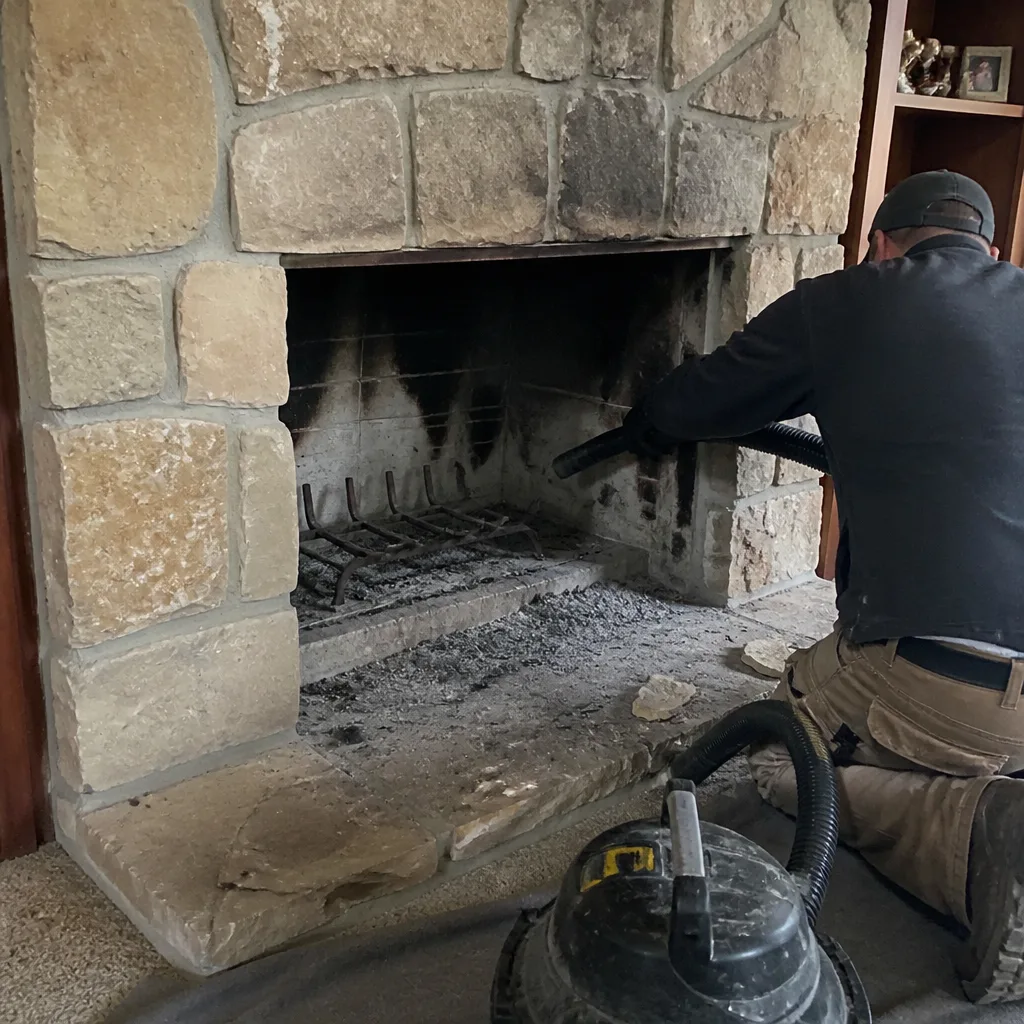 Before
 After
 Before
 After
When to Call a Professional
Some situations clearly call for a trained professional rather than a homeowner inspection. If you’ve moved into a Hamilton Lakes home without a documented chimney inspection history, book a Level 2 before your first fire in it. If you’ve had a chimney fire – even one you put out quickly and are sure went out on its own – you need a Level 2 inspection before you burn again. If the firebox brick shows cracking, the damper won’t open smoothly, the smoke chamber is visibly coated with glaze, or the exterior brick shows efflorescence or crumbling mortar joints, those are all cameras-and-report situations. And if the flue fails the camera scan with cracks or spalling, liner repair or relining is a specialist’s decision, not a homeowner’s guess. Chimney Sweep Hamilton Lakes offers free estimates in Hamilton Lakes – call (855) 766-2824 for an exact quote.
Frequently Asked Questions
Typical chimney sweep pricing in this part of North Carolina runs roughly $150 to $300 for a standard sweep with a Level 1 inspection, and $250 to $500 when a Level 2 inspection or camera scan is included. Add-ons like cap installation or crown repair sit on top of that in the $200 to $600 range depending on the size of the chimney and the condition of the masonry. Call (855) 766-2824 for an exact quote – estimates are free.
Not necessarily – a new liner is only the right answer when the flue has lost enough structural integrity that restoration can’t reasonably fix it. If the camera scan shows isolated cracks or surface deterioration in an otherwise sound clay flue, HeatShield restoration is an option worth evaluating before you commit to a full relining. We show you what the camera found before we quote anything. Call (855) 766-2824 to book a scan.
Annual inspection is the standard for wood-burning appliances, and cleaning happens on whatever cadence the flue’s condition calls for – usually annually for a household burning a real season’s worth of wood, more often if Stage 2 glaze shows up. Gas-burning fireplaces and vented appliances are on a similar annual cycle for inspection, but the cleaning cadence is often lighter. Call (855) 766-2824 for an exact quote – estimates are free.
Two risks build in parallel. Creosote, especially toward Stage 2 and Stage 3, is the fuel that feeds a chimney fire – and those fires often go unnoticed until they’ve cracked the liner. The other is moisture. In the Piedmont, an unmaintained chimney accumulates efflorescence, mortar joint erosion, and eventually cracked crowns – the exact failure paths that turn into a rebuild. Call (855) 766-2824 for a free estimate and let’s look at what’s actually in the flue.
Yes. Because we handle sweeping, inspection, fireplace repair, and chimney cap and crown work under one roof, the findings from a sweep don’t get handed off to a second company with a second scheduling delay. If the sweep turns up a cap that needs replacing or a crown that’s cracked through, we can quote it the same day – though not every repair is safe to rush, and we’ll tell you plainly when something can wait. Call (855) 766-2824 to book.
No. A Level 1 inspection covers accessible surfaces only, which is not sufficient after a chimney fire because hidden damage inside the flue or surrounding structure may not show up at those surfaces. A Level 2 inspection, which includes the full-length camera scan required to see what happened to the liner and smoke chamber, is the standard after any chimney fire or property sale. Call (855) 766-2824 – estimates are free.
The Bottom Line
The single biggest improvement most homeowners can make to their chimney maintenance is to expect a real inspection alongside every sweep and to ask for it in writing. A chimney that’s brushed but never documented, or a sweep who comes and goes without photos, isn’t helping you plan – they’re just handling today. The Chimney Sweep Hamilton Lakes approach is a diagnostic sequence: clean, inspect, show you what was found, and quote the right fix for what the camera actually shows. Whether that fix is a cap, a HeatShield restoration, or nothing at all this year, the point is that you have facts. Preventive work now, on the schedule the evidence supports, is how a chimney quietly gets older without quietly getting dangerous.
If you’re due for a sweep or have never had a documented inspection on a home you’ve lived in for a while, start there. Call (855) 766-2824 for a free estimate. We answer 24/7. Fast dispatch from 7am to 7pm, Sunday through Friday.
Written by the team at Chimney Sweep Hamilton Lakes.